


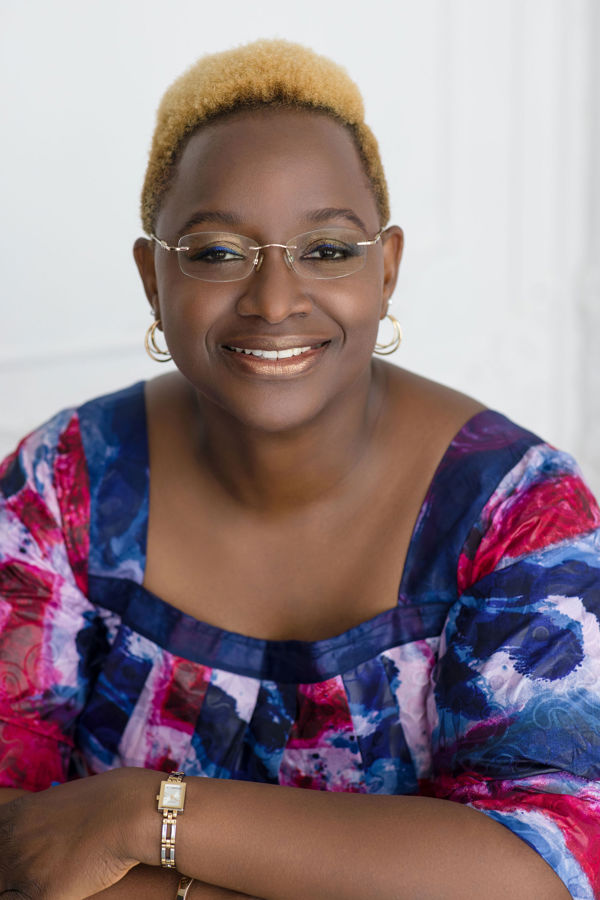
A discussion with Bami Adenipekun in response to her keynote talk at the ACAT conference hosted in Swansea in 2024
Bami Adenipekun and Ceara Geoghegan (Reformulation editor) met online and talked about the prospect of writing something for Reformulation which built on the momentum created by Bami’s keynote speech for ACAT’s 2024 conference.
Trading in a packed auditorium at Swansea university campus on a hot July day for online screens, amidst technical glitches we spoke about the messages Bami intended to share with others. What motivated her to become a self-appointed spokeswoman for CAT? Where does trust come into this? Here are highlights of our conversation which meandered around themes of power, race, prejudices and owning your own story.
When you curated your ideas for the presentation, what were the main issues?
There were two key issues that I talked about. One of them was trust and the other is power dynamics.
Why were these ideas important to you and what made you want to share this?
It came from me going through therapy. I think it is important to go back to my early encounter with CAT as a therapy model and my then therapist. The fact that, when I got into therapy as a Black woman, a Black British woman, with my experience of institutional racism, my experience of discrimination across all levels, I was wondering whether this white, middle-aged therapist, will she understand where I was coming from?
When I came into therapy, I knew I needed help. I knew I needed to offload and everything like that. Up until that point, I hadn’t heard of CAT before. I had other counsellors before, I think some of them had maybe done CBT or any of those other approaches but I had never heard of CAT before. The main issue at the time was, I am looking at this white, middle-aged woman and thinking ‘does she really understand?’ That suspicion, that maybe she wouldn’t understand. That coloured the first four sessions. I was just going there to just offload.
When I look back now, a lot of the questions those therapists would ask me, it almost felt slightly judgemental. It almost seemed like they had a view - a therapeutic view that they had - a model that they had and it seemed as if they expected me to fit into it. They expected my world view and responses to fit into that. I remember one of the ones I went to, when the woman kept challenging me and kept going on and on about why I kept talking about my big sister, who was very ill then died afterwards, and I am thinking ‘you don’t get it do you? This woman is clueless, this is just a waste of my time’. At one point it just felt like a western view of the way I should respond. The way I should frame certain things, was coming out so clearly as if that is the only way to view things. I made up my mind, this is just a waste of time because of that rigidity. It wasn’t just the rigidity, that person reinforced institutional racism. If you think about institutional racism, you’ve got bias, whether it is conscious or unconscious. So I felt like her biases were just getting in the way.
I figured the next person would not understand, yet again. So, for the first few sessions, I went in and thought ‘OK, you know what, since you are not going to listen to me, this is my session I will just talk’. I made up my mind that I will not allow myself to be spoken to. I will just literally offload and I will not allow myself to be shifted from my cultural views. That was what I thought was happening.
At one point it just felt like a western view of the way I should respond. The way I should frame certain things, was coming out so clearly as if that is the only way to view things.
Where does trust come in?
To fully understand the whole concept of trust, you must look at the way that mental and emotional struggles, health issues, cancer are hidden. Those are things even until now, you may find a lot of families, from Nigeria, or other African countries, as well educated as they might be, I understand it is a personal thing not to talk about diagnosis. But even after the person has died, they will say things like ‘someone died after a long illness’. Or ‘after an undisclosed illness’. That is the context for the whole thing about trust, culture and all of that stuff. From my cultural way of life, I was already a rebel, breaking out of the mould to even speak, to even seek therapy because therapy is countercultural, the same way we are taught ‘what happens in the family stays in the family’. When you have a cultural background like that, any form of breaking the mould that is set is seen as disrespect and betrayal.
The whole seeking of the therapy then is seen as something that you are meant to be ashamed of because the perception is that if you are going to therapy then that means that something is wrong with you. For anybody from an ethnic minority background, black, Asian, mixed, whatever, for as long as you have had any immersion in the culture, any attempt to step out of that is a big deal. So first and foremost, me coming out to seek any therapist of any kind is already a big deal. Now, here’s the thing, from personal experience, I knew that secrecy, stigma, shame, I knew those things were detrimental, but I have had to learn that the hard way.
As you are describing this, I am sensing this is a deeply personal topic which touches on shame and a feeling of going against that which is familiar. So, arriving in therapy, you are already out of your comfort zone. Then you meet with someone who does not represent your culture, your understanding of life, your world view and it seems as if they are trying to shift you to their perspective by controlling what you talk about, leaving you feeling judged?
Judging my responses. I had two separate lots of therapy before I encountered CAT. Two whole journeys where I felt judged, or not listened to and this whole thing about, as a Black British woman, not being listened to, not being valued by the health system. My pain being dismissed. I still had it up until a couple of years ago where my pain was minimised. It is still an ongoing thing.
So with the CAT therapist, for the first few sessions, all I did was, I just offloaded and everything and anytime the therapist was trying to ask me questions, all I was thinking about was ‘nice try, you are not going to catch me’.
Did it ever feel possible to talk about how you felt in that therapeutic relationship?
Well put it this way, in the other therapies I was trying to express myself and I was trying to let them understand where I was coming from and because of what I was getting back in terms of ‘why did you do this?’ ‘why did you have to do this?’ I wanted to try, I knew this was important because when you look back on your life and you look back on the way things have been done before and for me, I get to choose. I already knew that stigma and shame only caused harm with the experience of caring for my late mum when she had breast cancer in Nigeria.
With the other therapists, I think, in hindsight, I left each of the sessions frustrated and really, really annoyed. There was a part of me that was wondering ‘why am I even bothering with this?’ I figured; I will keep trying until I get someone who is the right fit. That was my rationale but at the same time my view had been coloured by the two previous experiences.
One of the things I talk about when I speak to students is ‘every single person is carrying an invisible backpack’. I didn’t originate the idea, someone mentioned it and I found it useful. It is that thing that every human being has an invisible backpack they carry. So, in my backpack, in your backpack, you might have experiences of how you were treated as a child, and all of that stuff. In my backpack they are experiences of trauma, cancer, stigma, institutional racism, my own prejudices. Of course, there are experiences I had from these previous therapists. It is an invisible backpack. Unless you open that backpack and share some of the content, there is no way they are going to know what is in there. I brought all of that to the first few sessions. Now don’t get me wrong, it doesn’t mean I didn’t listen altogether but for the most part I had a lot to offload just after my sister died.
After the fourth session, my therapist then said ‘OK, so far, all you have just been doing is just talking at me and not really letting me get a word in edgeways. What will it take for you to now trust?’ I remember when she said it, I was like ‘oh, busted.’
The thing is, that question she asked of me was a game-changer because it showed a willingness on her part to want to come alongside me and seek to understand what was responsible for my lack of trust.
I know that in your therapeutic model you have all those things down as theories. I think all psychological models have something similar to being alongside someone. It is one thing to have it as a theory and another thing to have it in practice. That was when I could then start to open up about the reasons why I behaved the way I did. It is not that easy to be confronted with someone who says ‘what do you know?’
It sounds like you felt busted when an observation was made of what was happening between you and it gave you a chance to look at why that was happening. What was your experience of their curiosity?
That’s an interesting view. When we do our mapping, write our letters, we put ourselves in an observer position with you, like you say, to be alongside, ask ‘hey, look at that, what is that, what is going on?’
The thing is, it is how you ask the questions. The therapist before the CAT one was frustrated with me as well, she actually showed it. And it was that frustration that then made me frustrated. So for example I went to one of the sessions, and the majority of the session I was talking about the dynamics with my sister and she was like ‘you are only talking about your sister, why?’ and I even tried, you know what, because my sister was seriously ill at the time and there was a lot going on between us and I said to her, ‘I don’t have the luxury of ignoring her all the time’ you understand?
When it comes to the way to relate especially within family relationships within the African context, there are expectations of what you’re meant to do whether you’re the older or younger one. It takes a lot of courage to decide to cut someone off even if the relationship with them is toxic. Making a stand like that is seen as sacrilege and dishonour of the family. It therefore was not something I could take lightly, and I tried unsuccessfully to explain that to one of the previous therapist. I could sense her frustration but I in turn got frustrated when she kept harping on “why don’t you distance?”
That is really helpful to hear: a suggestion that is meant to be helpful but creates an obstacle because it is not grounded in the understanding of options available to you that would be respected and honoured in your life? When the other person was talking about this, I was like ‘you know what, there are so many things I need to unpack before you can begin to understand why I am at this point, why I am talking about this?’.
Now here’s the thing, when I got into CAT, those problems didn’t disappear but because I was heard, because I was given that opportunity that OK, you know what, you can trust me because I will listen. There was one of the things that I will never forget. There is something that I call ‘respectful curiosity’. So rather than making an assumption about what I’m saying, and maybe you as a therapist think ‘that’s not emotionally healthy’; you can ask an open question that seeks to understand
So for example, something along the lines of ‘make me understand, what does that look like to someone here in the UK?’
Yes, I was born here and my formative years were spent in Nigeria. You know there are a lot of young people who are brought up, who have never stepped foot in their parents’ countries of origin but when you are thinking about the culture they are brought up with, those things still shape the way they do things, the way they see things and everything. That is my reality of sitting astride two different cultures.
This is something I tell professionals, no matter how skilled or excellent you are in your area of expertise, you cannot be an authority on that person’s lived experience. That is why we need respectful curiosity. For so long, people from ethnic minority backgrounds are subjected to questions that white people are not.
So my therapist asking me ‘oh you said, x, y, z, explain that to me, what does that mean, what does that look like?’ It is the way the question is asked. That is respectful curiosity. That is not someone patronising me. That is someone who just wants to understand my rationale and get me thinking myself. It gets me thinking more broadly about things I have come to accept. So guess what, what that other therapist was trying to push me to do, which just frustrated me, not only did I see it here but I can then embrace more emotionally healthy responses. Because here’s the thing, our ways of life are our ways of life. By the time I went to therapy I was over 40 so you cannot expect me to overnight, turn around and change the way I’ve viewed stuff and been conditioned. You cannot expect me to dismiss everything about who I am, my ethnicity, culture, way of life. It takes respectful curiosity, it takes creating the space.
Let’s now talk about power.
What was it about the CAT approach that addressed issues of power for you in your life?
Two things: the letter and the map. After the session where I was busted and realised this was someone who wanted to come alongside me and hear me. I saw that she wasn’t patronising me, she just wanted to know so she can understand me better and help in whatever way. I was happy to tell her, to explain. It was something I did with joy, I was really happy to do because I was like ‘this person actually wants to help me, this person is listening to me’.
In my equity work, this is what I say. Everybody wants to be seen, heard, understood and feel like they belong. I remember after a number of sessions, she said she will send me a letter and it will be a summary and said, ‘I want you to read through it and tell me if it is a good understanding of what we said, what has gone on’. So I read through it and there were some bits of it where I was like ‘no, I don’t agree with that’ and we sat down together and we talked about it.
For the most part, I could see I was heard and that is the thing because when you are a patient in a health setting, the therapist is in a position of power and you are in a vulnerable position. It is when someone like me shows up, I am the one who needs your help. So the power dynamics are uneven.
It is important to share some of the power you have with the people you see. Coming to a therapist, they are already feeling vulnerable and out of control, out of their comfort zone and everything so it seems important to share some of that power and be mindful of the power dynamics.
I am pretty sure in your training you talk about this power thing. You know it but does it translate to the people you see? All of the different relationships, that is the thing you are good at. It is one thing for you to know these nuances but another thing to make the other person who has come to see you feel that they have not been disempowered.
You know that thing where you are clarifying your understanding of what somebody is saying, the only way to do that is that letter. What that letter did, from my perspective, it said I have been listening to you and want to make sure that this is what we discussed and I am sending this to you so what do you think? Did I capture it? Again, it is that opportunity, inviting the person in to say ‘listen and not waiting until the very end of the sessions’.
Then when we start talking about the map. That map was something I found really fascinating.
What was helpful about mapping for you?
Just because it was helpful does not mean it is still not challenging to see. In the middle of it you have my default way of doing things that has not helped me up until now. Then you have the ways I can choose to respond, exits. And those exits, they are options. This map was not done behind my back, we did it together.
When you see the unhelpful ways of doing things, of course, your ego is not going to like to see that. A part of me was like ‘really? Is that the way I respond?’
So I suppose being able to have that in front of me, to say ‘this is your default mechanism and this is what happens when you keep doing….and here is a healthier way to give yourself an exit’. So having that puts me in the driving seat. When I am no longer with this therapist, I am still in the driving seat and I can choose something and because it is visual as well, so it is not just theoretical because the thing with giving people tips and tricks and tools, sometimes that is not easy to access, whereas something you can see that is well laid out, it is a powerful tool. For me it is like I am being given my power back. So I am not being disempowered. I am not just being given theory and expertise from this therapist.
Are there any additional points you would like to share with members of ACAT who might be reading this article?
It is important to be mindful that someone who is from a different culture, ethnicity and background to you, there are things in their backpack that at best you might have a theoretical knowledge of. We see how people present and we categorise them. You might be an authority on your own experience but you cannot be an authority on my own lived experience. So you don’t make people feel disempowered. These are all of the things that determine whether people from minority ethnic backgrounds will show up for therapy or not. People from ethnic minority backgrounds who are not accessing therapy as much as they require because they do not think that it speaks to them. This was part of the topic of a session I did with two therapists teaching on a CAT course last year. When people feel that there is no place for them, then they will try and create other avenues for themselves. Don’t get me wrong, a lot of times, this works but other times it doesn’t work as well.
As a Black woman in the UK, guess what, it is not my job to educate someone who is white. A lot of people think it is.
The United States context is different, but someone who is influential who has a mental health foundation there, stated that we need to match ethnicity of therapists, sexual orientation, in other words, what this person is saying is that ‘if you are black, a white therapist will not work for you’.
This is where things like that get dangerous then because what that means is there are not enough therapists from ethnic minority backgrounds to cover the need. That means that if there is someone that is putting that out there, because of bad experiences that people have had, that means potentially a lot of people will not be seen. They will not be served. This is where you have the danger of a single story. This is what Chimamanda Ngozi said, I am paraphrasing, ‘if you say a group of people are one thing and one thing alone, then that is what they become in your eyes but that is not the totality of who they are’. So I have had a fantastic experience with a CAT therapist who is white and middle class, and I have also had poor experiences with other white middle class therapists. So if I had thought from those experiences, I will look for a black therapist, guess what, in this part of Wales, I might be waiting forever. That is why these things are important because unless you engage respectful curiosity and work on building people’s trust, people will not come to therapy.
Let’s be honest, yes, compared to other models, you have a bit more smattering of people from different minority backgrounds, or people who look to be from ethnic minority backgrounds, but by and large, if there is someone who is not prepared to be open-minded like myself, they will look at that room and say ‘these are not people who will understand me, I don’t belong with any of them’. When people from ethnic minority backgrounds say things like that, we are not saying that because we just want to ‘mouth off’ we are saying it because we are living it daily. Everywhere you go, we are treated differently. In 2020, during the pandemic, there were some young men in a van, they started shouting at me ‘monkey monkey’ and making sounds, I was the only one walking along. These are experiences of direct racism. We saw with the riots last year. When people from ethnic minority backgrounds have a concern about belonging, about being seen and all of that, it is from a lived experience and that is why these things matter. Bami is an author, patient advocate, health equity consultant, researcher, speaker, and non-executive board member. She is also the founder of Inspired To Soar, a consultancy based in Wales with the mission to help everyone win through equity.
You can find out more about Bami's work on her website: www.inspiredtosoar.co.uk
Connect on LinkedIn: https://bit.ly/bami-inspiredtosoar