

In this page we feature a range of ACAT members' responses to an invitation to reflect on 2025's Black History Month theme: Standing Firm in Power and Pride
If you'd like to add a contribution to this page, please contact us.
Salome Mare Walsh
I've been reflecting on how racism is often mis-understood as something that resides in individuals, making it easier to see in binary terms: one is either racist or not racist. But I tend to view racism more as a matrix, embedded within our physical and ideological systems. I align with Ibram X. Kendi’s definition: “a collection of racist policies that lead to racial inequity that are substantiated by racist ideas.”
These systems don’t just exist; they shift and adapt, often in resistance to change or in fear of confronting racism. This makes acknowledging its presence and transforming it an ongoing challenge. For me, the idea of standing firm in power and pride sits within this context. I t means recognising my role in influencing change toward racial equity while also drawing empowerment from others within the same systems.
Those of us with lived experience know how hard it is to stand firm within racist structures, it can still be a matter of survival. Yet, there is hope. When we stand firm together, rooted in power and pride, our collective strength becomes a force for lasting change. MP Dawn Butler, Michelle Cox (RCN), Joanne Anderson (First Black female Mayor of Liverpool) and the late Sir Geoff Palmer are on my list of inspirational Black British people.
Reflection: From an anti-racist and equity perspective, how are you actively supporting others to stand firm in power and pride? What changes do you want to see or lead in your spaces? Do you ask your clients the impact of racism and divided communities on their mental wellbeing?

Caroline Greenwood Dower
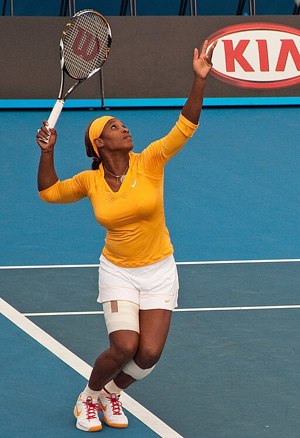 I have a photograph of Serena Williams, not dissimilar to this one, on the noticeboard in my office/ consulting room. I find her inspiring and in a particularly CAT-way. For me she demonstrates the importance of having a wide range of reciprocal roles and the flexibility to move smoothly between them, as and when the situation calls.
In this shot we see her intense concentration and focus. We can see that she will be merciless in sending that serve across to her opponent. She is strong, competitive, willing to annihilate 6-0, 6-0 if it happens…. She respects her opponent enough to not let up. And then, beautifully, she wins her match, she bounds up to the net and she greets her opponent so warmly. She encourages and celebrates them.
My understanding is that she is known to be a tremendous mentor to players on the tour. She can instantly change gear. She models that it is OK for all – but I think particularly women – to own their power and their gentle relational skills too. That flexibility, responsiveness to own needs and the needs of others, is brilliant. A complete, integrated Champion. I do not underestimate what it has probably taken to be a black woman on the professional tennis circuit. It is not the most diverse of sports. Serena completely earned her place in the pantheon of tennis greats.
Dupe Adu-White
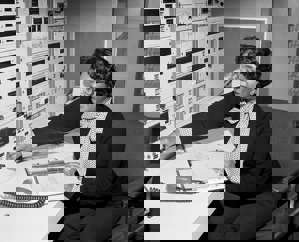
Not too long ago, I was again watching the film ‘Hidden Figures’. It is a film based on three women, Dorothy Vaughn, Mary Jackson, and Katherine Coleman Goble Johnson who were instrumental in helping America’s fight against the USSR to get a man to space.
I wanted to share this film as it reminded me of Black women who may not get the big lights or be famous, such as Oyinkan Abayomi (6 March 1897 – 19 March 1990) a political advocate for women’s rights and education in Nigeria.
Women like these have been the bedrock to believing that I can achieve things and have the right to be more than just the stereotypes I was given, as well as embrace, share, and celebrate my Black cultural identity that can at times can feel dismissed or unappreciated. But instead, through figures like these, it is one of respect, resilience, comfort, joy, and strength. It influences my personality, appreciation, interaction with the world and environment, and my clinical and professional practice in very positive and helpful ways.
So thank you to those past, present, and future Black people who continue to ‘stand firm in power and pride’.
Rhona Brown
Reggae poet Benjamin Zephaniah sadly died in December 2023 at the age of 65. In his years of writing, performing and contributing to education, he had a huge impact in the UK and beyond. In his website, now managed and updated by his wife Qian, he's described as "poet, writer, lyricist, musician and naughty boy". His voice spoke to people across all ages, and during lockdown his poem 'People Need People' named something crucial about the importance of relationships and connection.
 Some years ago, when preparing for delivering some CAT practitioner training around the Social Self with a Bakhtinian leaning, I came across a video of his poem 'Rong Radio' which seemed an incredibly impactful account of the power of societal discourse around many issues - including race and ethnicity, gender roles, mental health, capitalism, consumerism, and global inequalities.
A Bakhtinian view of dialogism posits that we are constantly in dialogue with societal voices and a CAT interpretation of this is that such messages may be internalised and form part of a person's self-identity. Ryle & Kerr wrote about the 'authoritative discourse' which can seem non-negotiable, a fixed perception of the self, often based on hostile messages and voices in the social world. In CAT we might aim to occupy instead the position of helping open up a 'persuasive discourse' where a healthy skepticism can be fostered, and possibilities for a more fair and compassionate relationship with the self can be opened and explored over the course of therapy.
I found Zephaniah's poem to be a powerful challenge to the racism which can pervade us all through the messages dominating media and ways people and groups are represented. I feel grateful to him for his inspiration in approaching and supporting change. He was not a therapist but I feel the legacy he left had much therapeutic value.
If you'd like to offer a reflection about what Black History Month means to you, or a black or brown person who inspires you in your CAT practice, then get in touch.
If instead you'd like to write something on this theme for the Reformulation journal, then check out how to contact the editors with your ideas or drafts.
Image Credits:
Sir Geoff Palmer OBE: Scotland’s first black professor and the one who came up with the idea of a song to celebrate the Windrush Nation. Image by Andrew Cawley, CC BY-SA 4.0 , via Wikimedia Commons
Serena Williams serving at the Australian Open 2010: Image by emmett anderson, CC BY 2.0 , via Wikimedia Commons
Mary Jackson working at NASA Langley: Image source - https://picryl.com/media/mary-jackson-working-2-restoration-8a5b7b - Public Domain Licence
Benjamin Zephaniah at Hull University: Image by David Morris from Hull, England, CC BY-SA 2.0 , via Wikimedia Commons